Knowledge base
A systematic approach to knowledge in radio communications
page.knowledge.description
How to begin
The basics of amateur radio
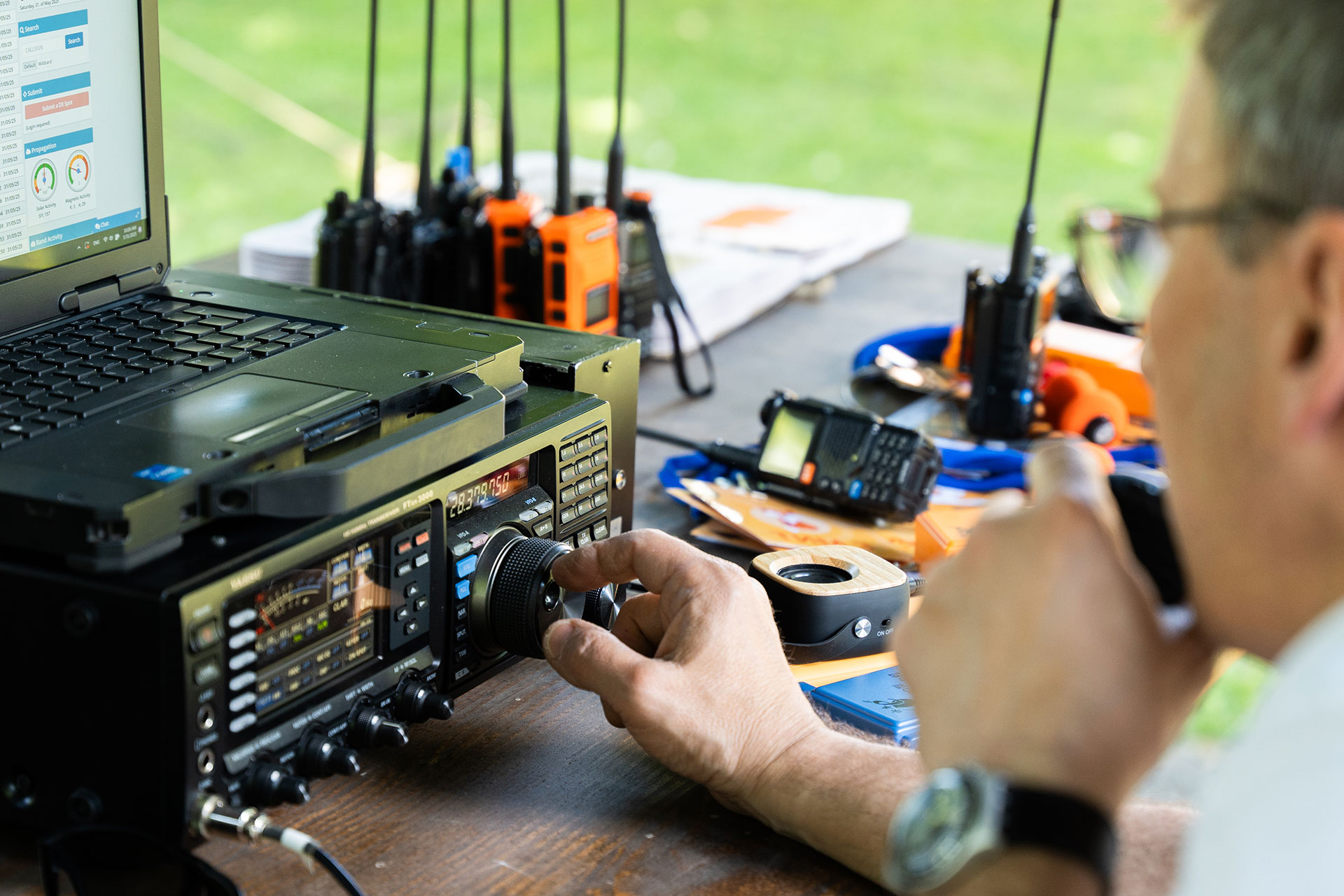
What amateur radio is and how to become a radio amateur. Licensed enthusiasts make contacts for company, learning, and communication when it is needed.
Licensing
An exam in regulations and technique, a licence class, and a callsign. The prefix for BiH is E7, then a number and letters according to the class passed.
Ethics and rules
The right frequencies, short and polite conversations, and the callsign at the start and the end of a contact. The code is courteous and non-commercial.
Knowledge radio clubs
A club helps with the exam, practice, and equipment. Through the clubs, operators join the Amateur Radio Union of Republika Srpska.
02 · Propagations
Frequency bands
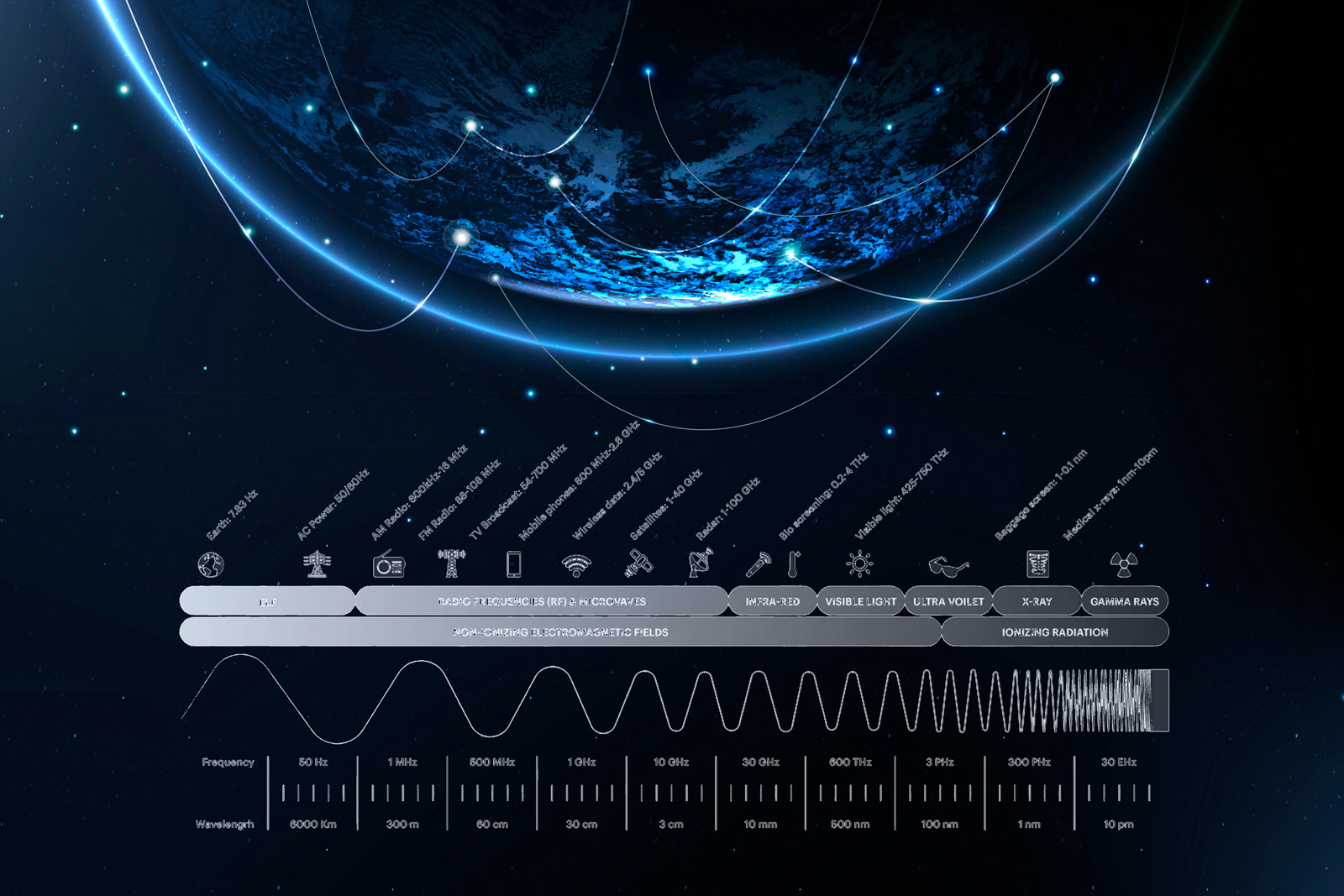
HF, VHF, and UHF do not travel the same way.
Sun, time of day, and season change the range and quality of a signal.
HF, long-distance contacts
The 3–30 MHz range. The signal reflects from the ionosphere and arrives thousands of kilometres away.
VHF and UHF, local
Line of sight, tens to hundreds of kilometres, often through repeaters on high ground.
Special conditions
Sporadic-E, tropo ducting, meteor showers, and EME, a reflection from the Moon.
03 · Modes
Voice, telegraphy, and digital signals
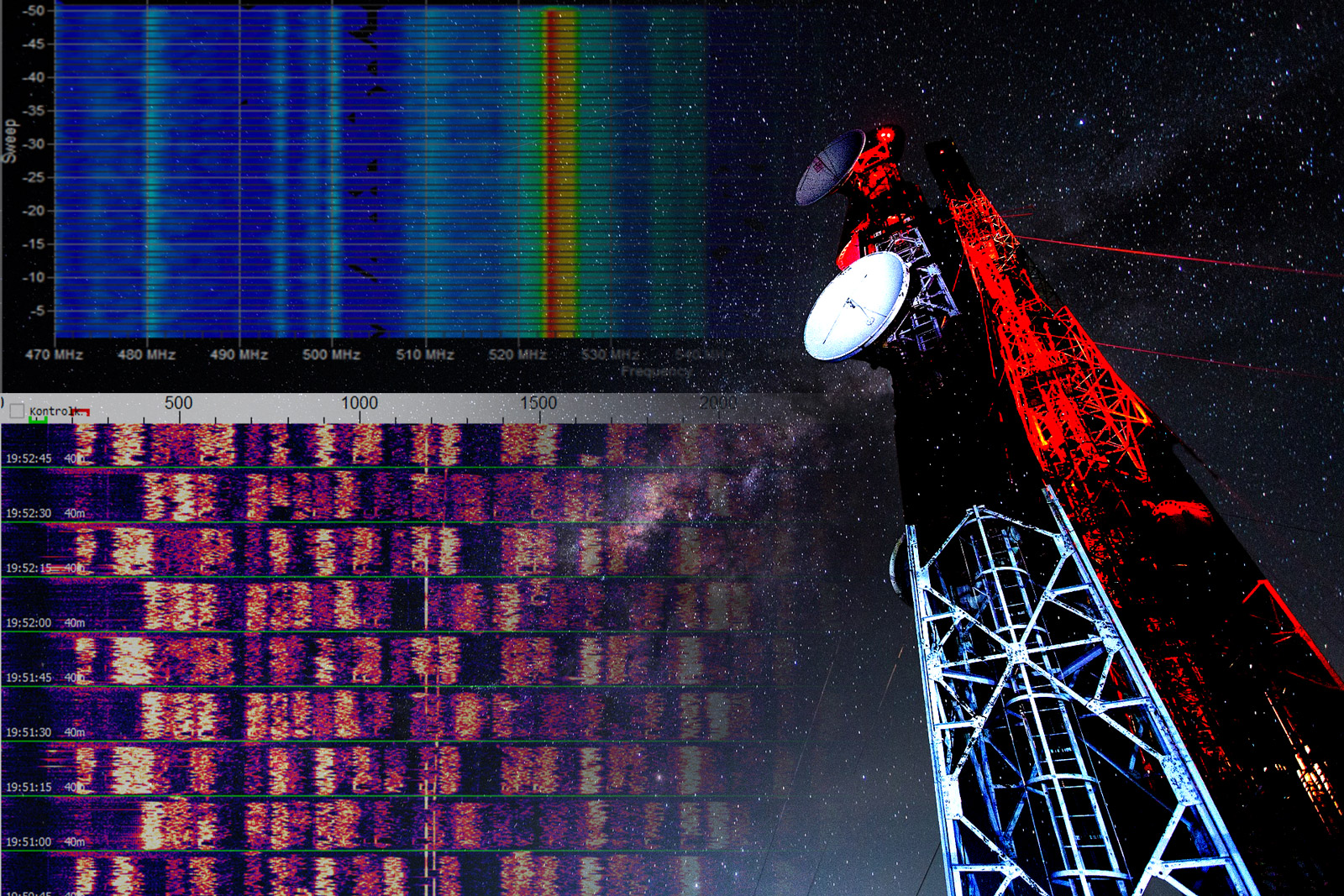
FM and SSB, Morse, then FT8, DMR, and D-STAR.
Voice
FM on VHF and UHF, SSB on HF. Conversation stays the most natural mode on a net and in a contest.
CW
Morse still goes the farthest at the same power. A narrow bandwidth gets through the noise.
Digital modes
FT8, RTTY, and PSK31 for weak signals. DMR, D-STAR, and C4FM carry voice across networks.
Hunting distant signals and amateur radio contests.
DX hunting
A contact with a distant country. DXCC asks for 100 confirmed entities, and a cluster reports who is on the band.
DX expeditions
Teams take a station to rare islands and summits. Thousands of operators call in a short window.
Contests
Weekend contests, from CQ World Wide to the domestic cups. As many contacts as possible in the allotted time.
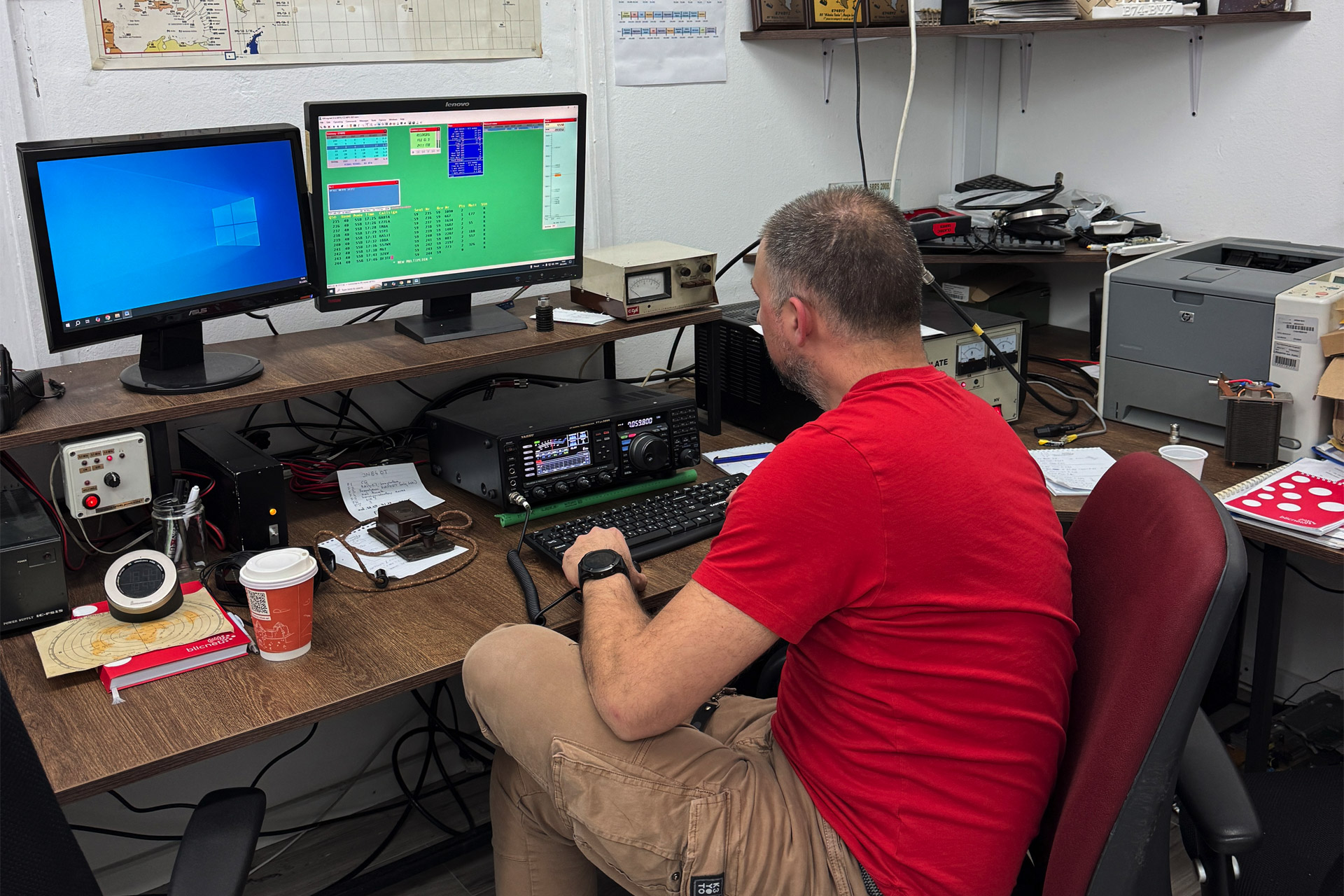
04 · DX
DXing and contests
A rare station, a pile-up, and a weekend in which contacts are counted.
05–07 · Outdoors
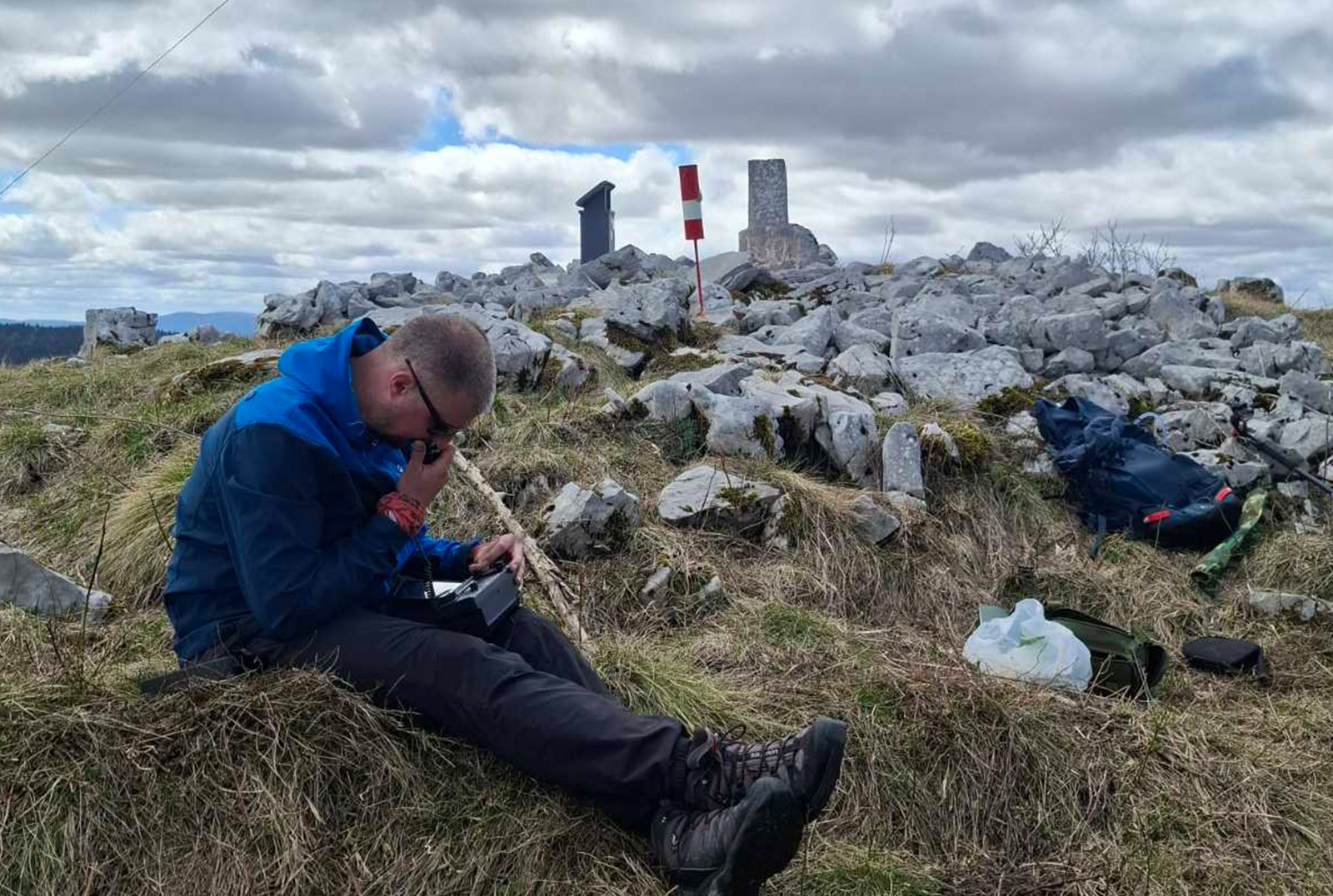
SOTA
Summits on the Air
Portable work from a summit. Kozara, Manjača, Jahorina. QRP, a short antenna, a battery.
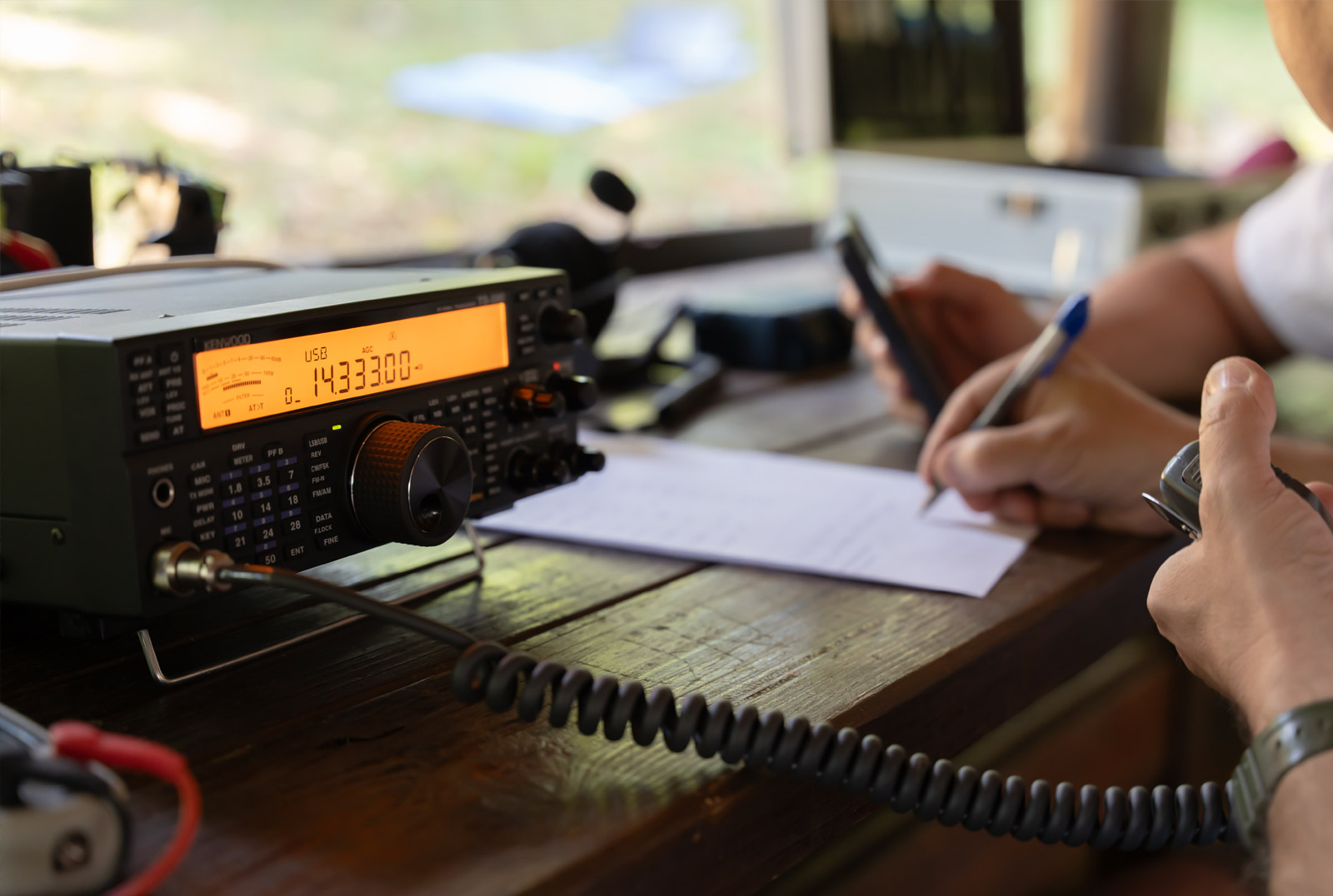
POTA
Parks on the Air
A park in the POTA database, with its own code. Kozara and Sutjeska are natural ground.
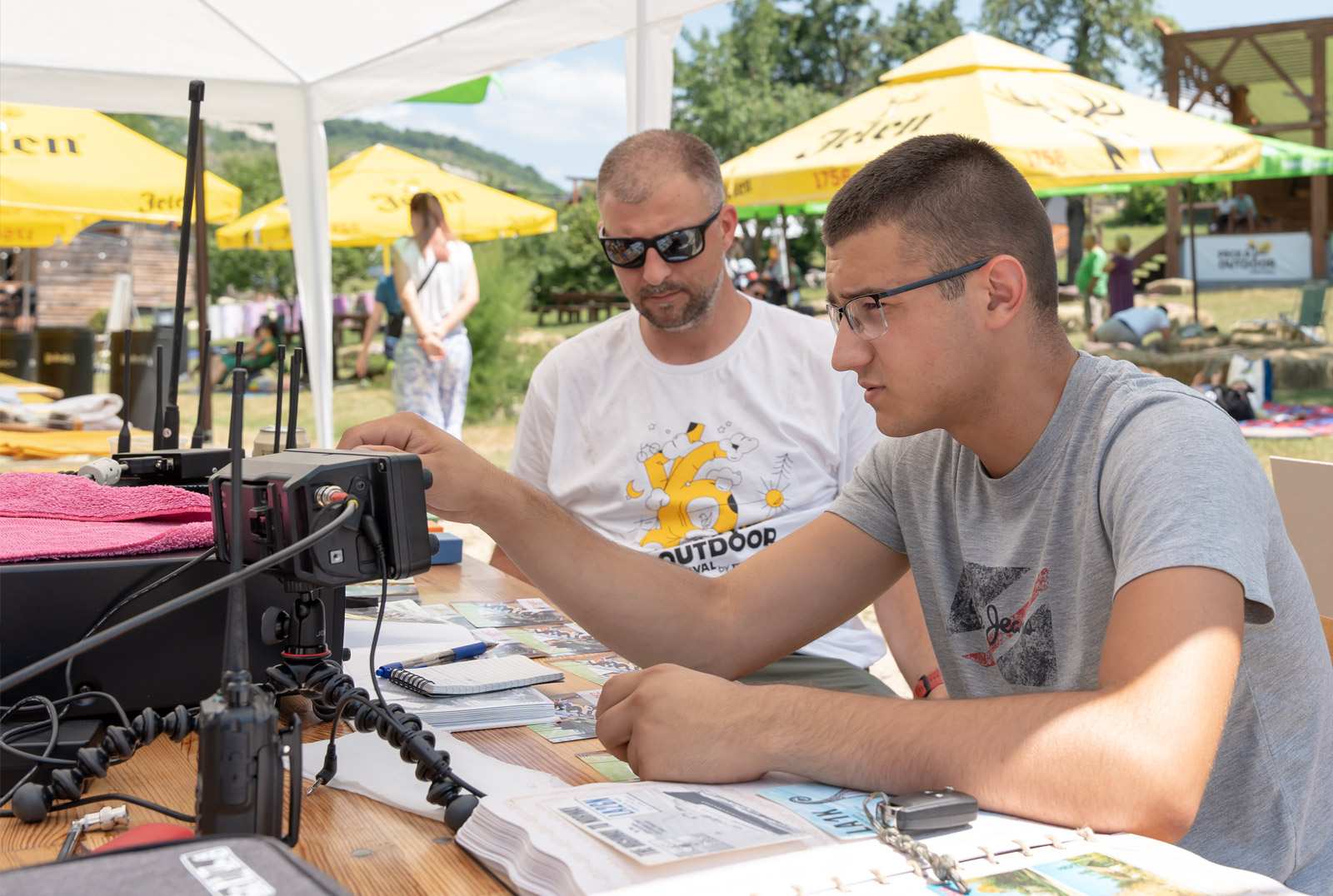
WWFF
Flora and fauna
A reserve and 44 contacts for a recognised activation. Perućica and Sutjeska are on the map.
08 · Sport
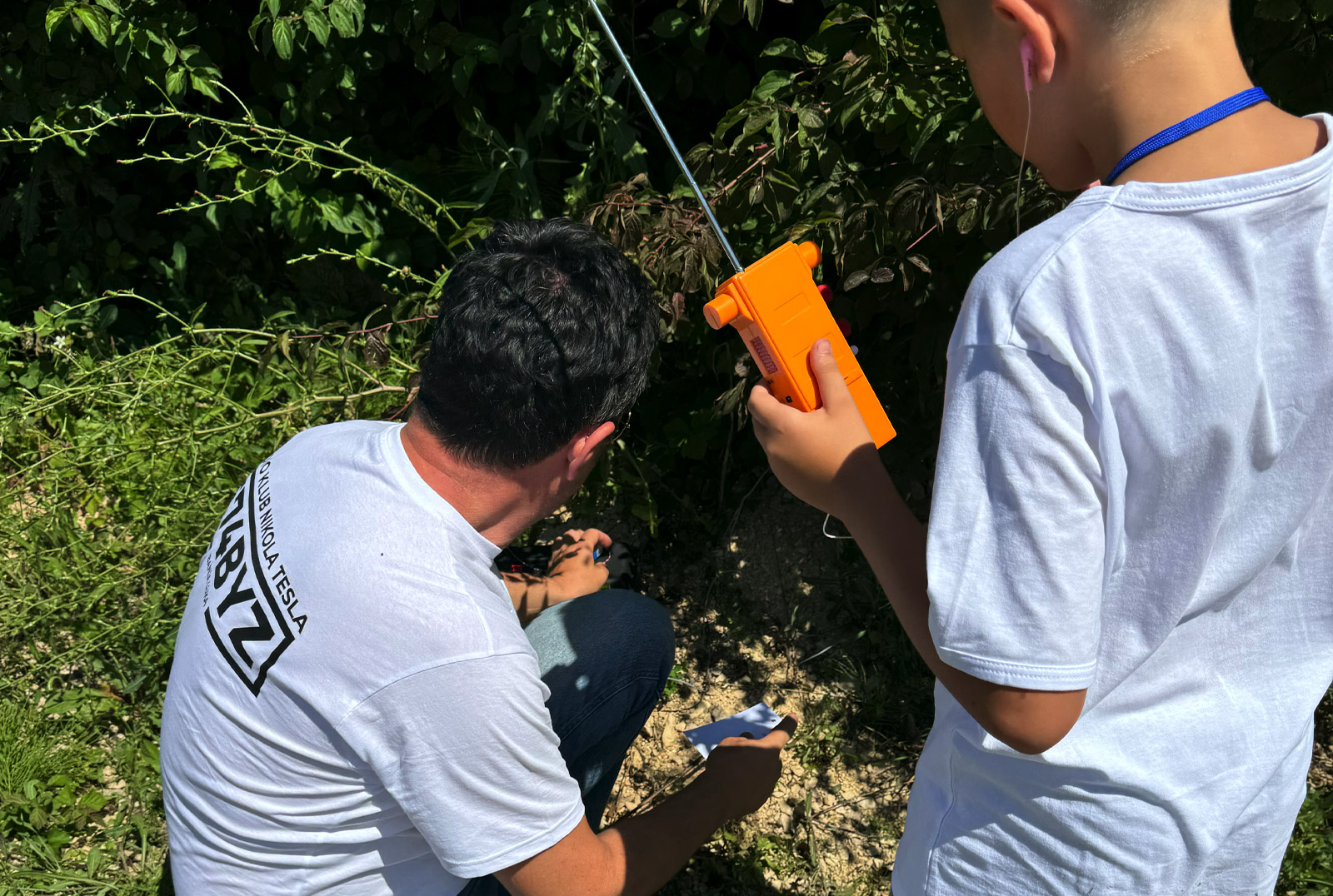
ARDF, foxhunting
Five foxes, a map, a compass, and an ear.
Radio orienteering. The winner is the one who finds the transmitters faster.
Five foxes
Transmitters take turns on 144 MHz or 3.5 MHz. Each sends its number in Morse.
Equipment
A handheld receiver and a directional antenna: a Yagi on two metres, a ferrite antenna on eighty.
The scene
Club contests, categories by sex and age, and a recreational hunt at gatherings.
Amateur satellites and the ISS. The frequency shifts with the Doppler effect.
OSCAR
The first amateur satellite launched in 1961. LEO satellites carry an FM repeater, 145 MHz up, 435 MHz down.
Working from the ground
A VHF/UHF radio and a handheld Yagi. A pass lasts ten to fifteen minutes.
ISS and QO-100
ARISS connects schools with the station. QO-100 holds a contact without tracking an orbit.

09 · Satellites
Satellite communications
A contact lasts as long as the pass.
10 · Antennas
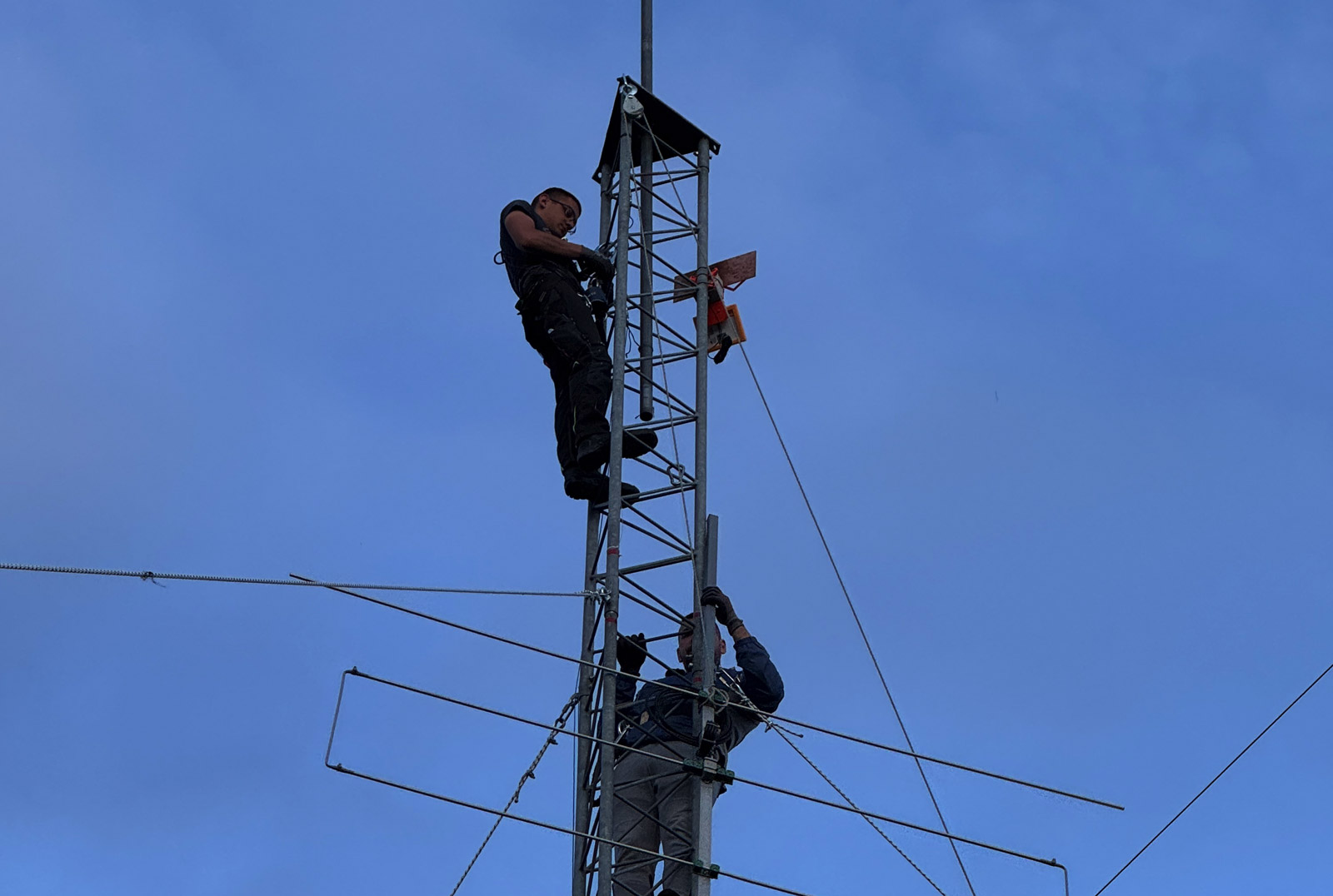
Building your own equipment and antennas
A dipole, a Yagi, a QRP kit on the table.
The antenna still changes a station's range more than anything else.
Electronics
From a small telegraphy transmitter to an interface. Soldering and a schematic are part of the exam too.
Antennas
A dipole for HF, a Yagi for VHF, a vertical from a telescopic mast. The SWR shows when the length is right.
Exchange
The club and a homebrew exhibition. Schematics are shared, and someone else's advice shortens the work.
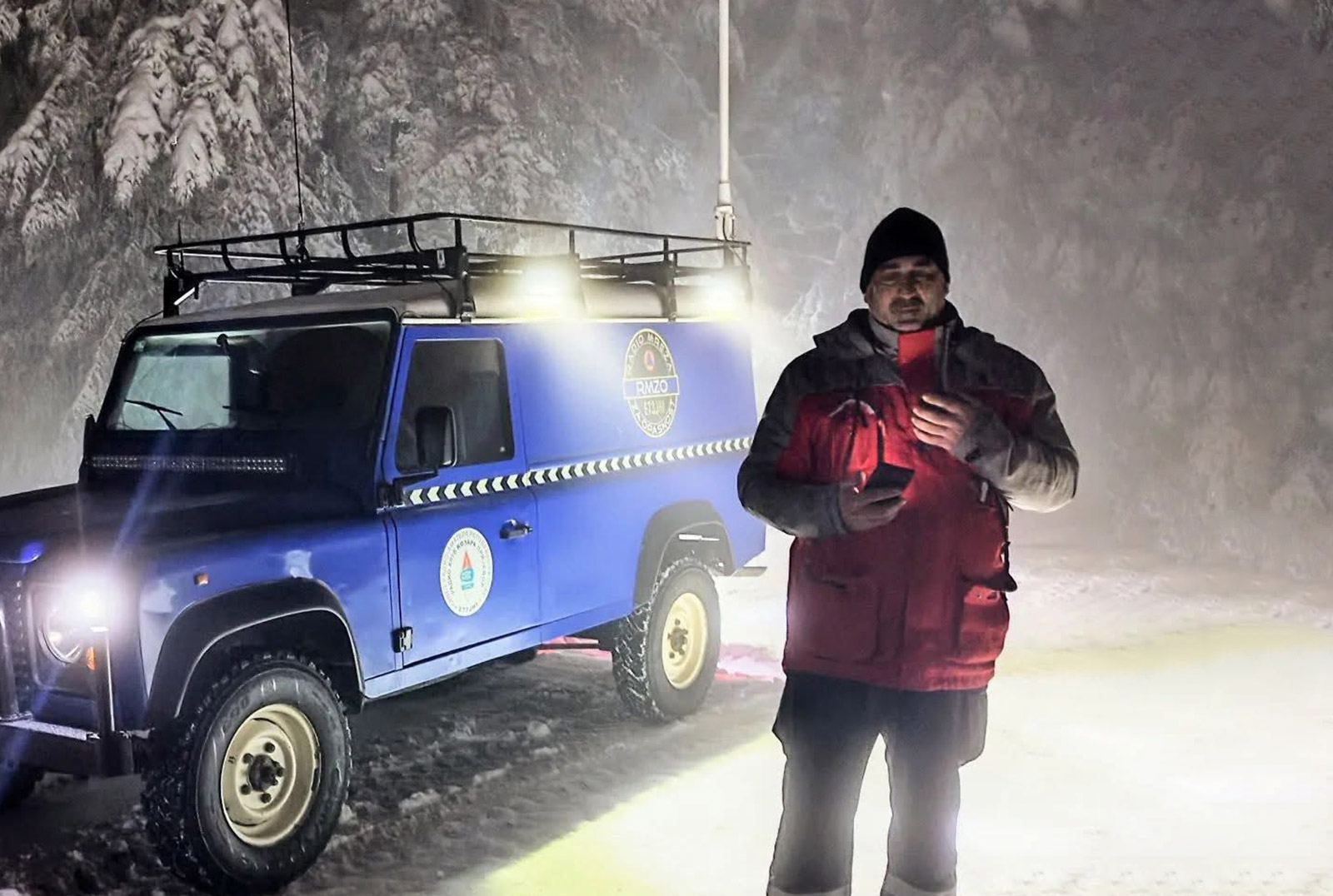
A volunteer channel through the clubs, alongside civil protection.
The role
A flood, an earthquake, or a power cut. A portable station keeps the centre in contact with an isolated place.
2014.
During the floods in BiH, RMZO watches were among the few channels in the field.
The rhythm
Every club has a frequency for an emergency. Once a week: a roll call, a generator, a battery, an antenna.
11 · Emergency
Radio network for an emergency
When the mobile and fixed networks stop.